Blackburn Central Library

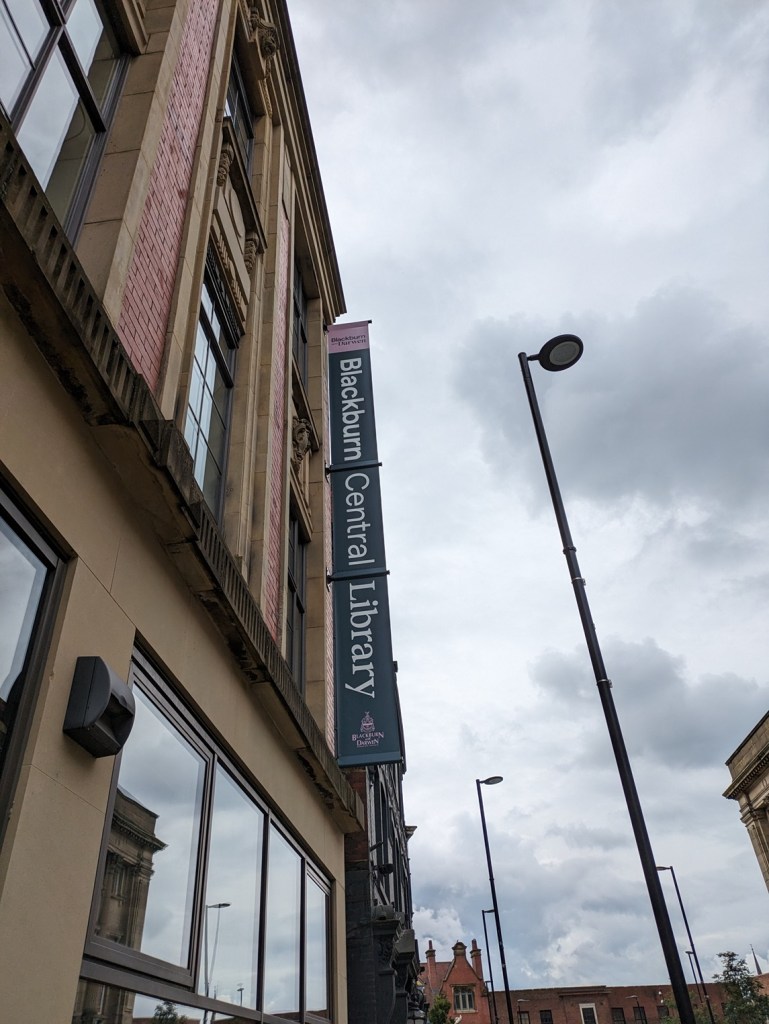
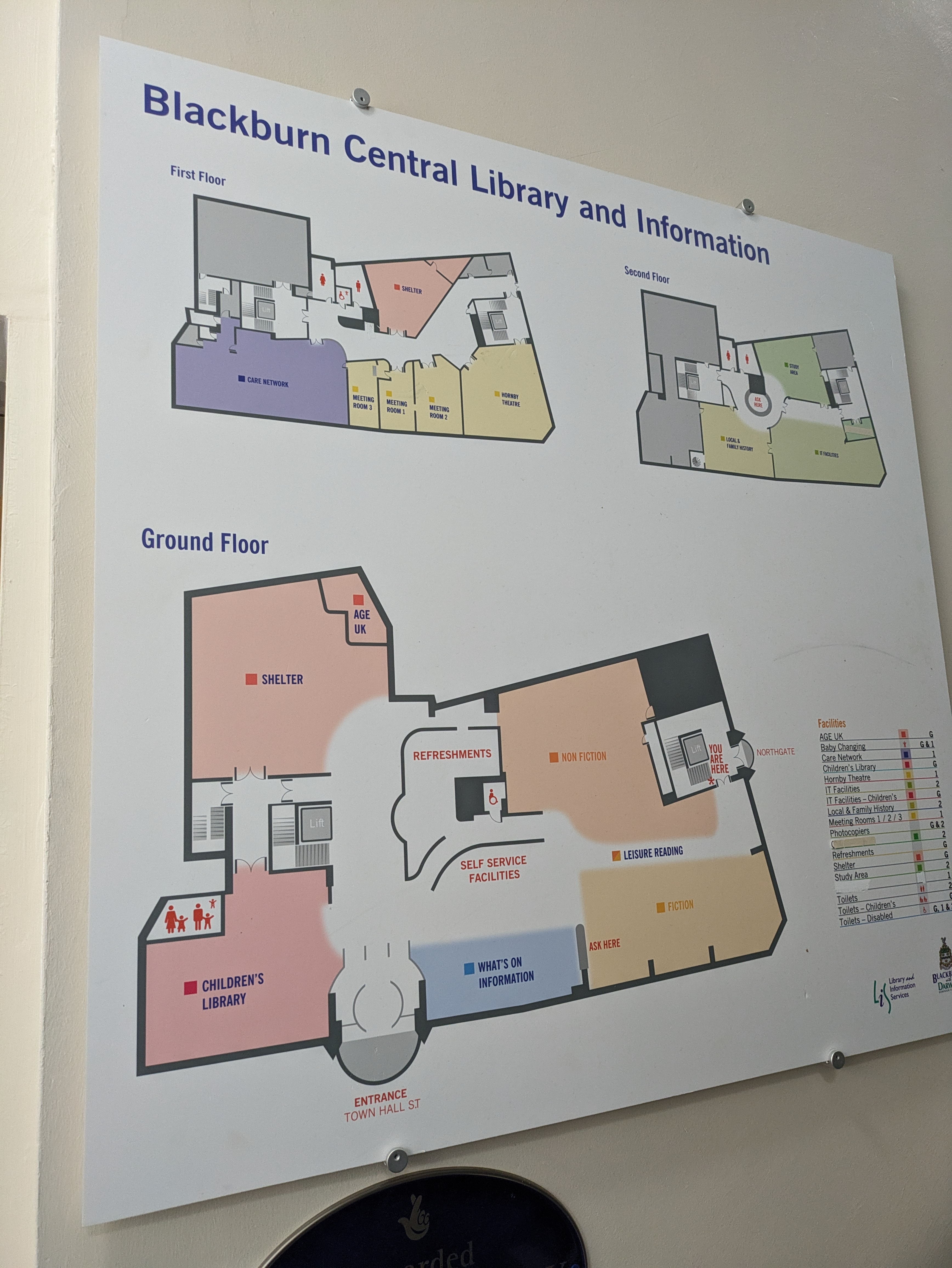
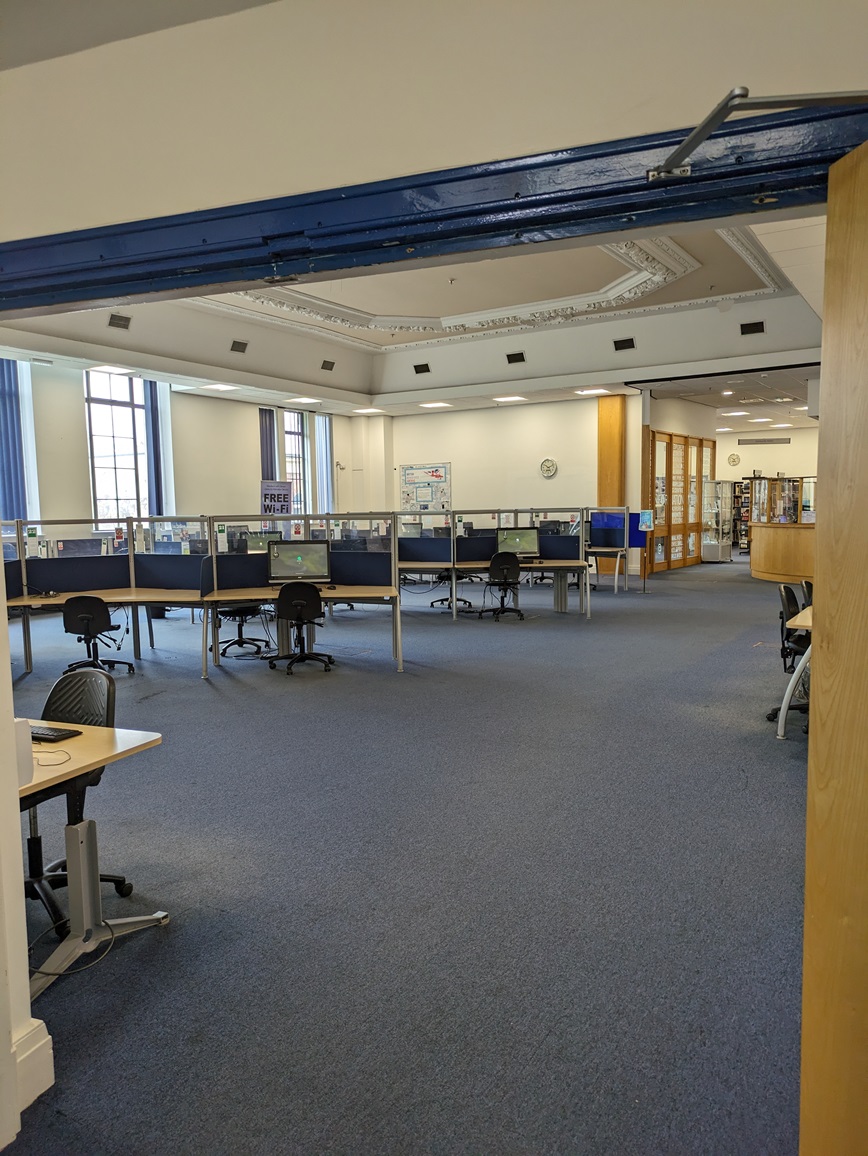
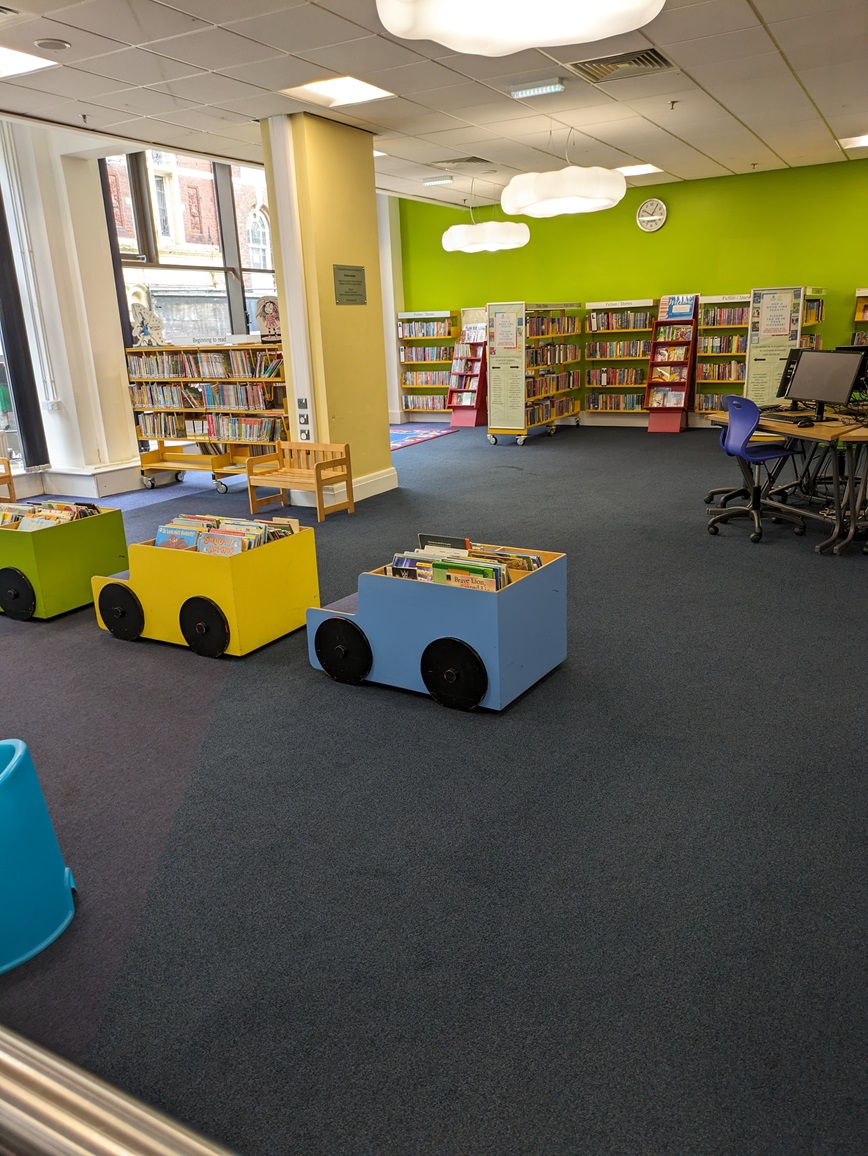
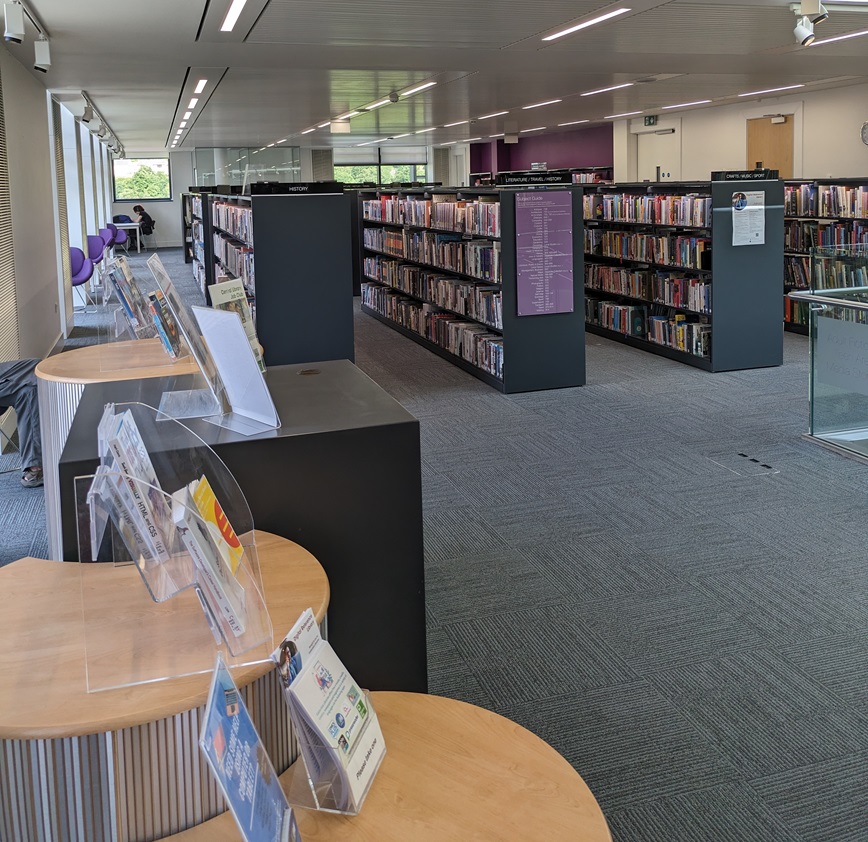
Blackburn Central Library is part of a nice muti-storey community centre in the city centre. The building is on several floors and community groups hire the rooms upstairs. There was a dance group class or show upstairs (majorettes?) and as we looked like lost parents wandering around, several members of helpful staff asked if we were looking for the dance show. 

There was also the Hornby lecture theatre and a large IT area with computers and plenty of study desks. There’s a section with local history material. The complex had two lifts and toilets so was very accessible even though it was on several floors.

There was a photography display in the corridor upstairs as the local amateur photography group meets there and a project put together by Ukrainian refugees with photos and letters. There was also a jigsaw out and I think I saw a piano. This was all evidence of a bustling community centre. 

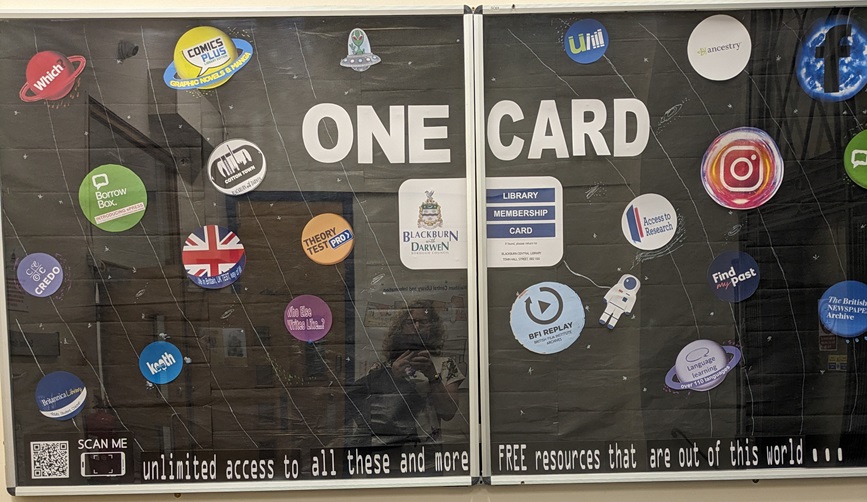
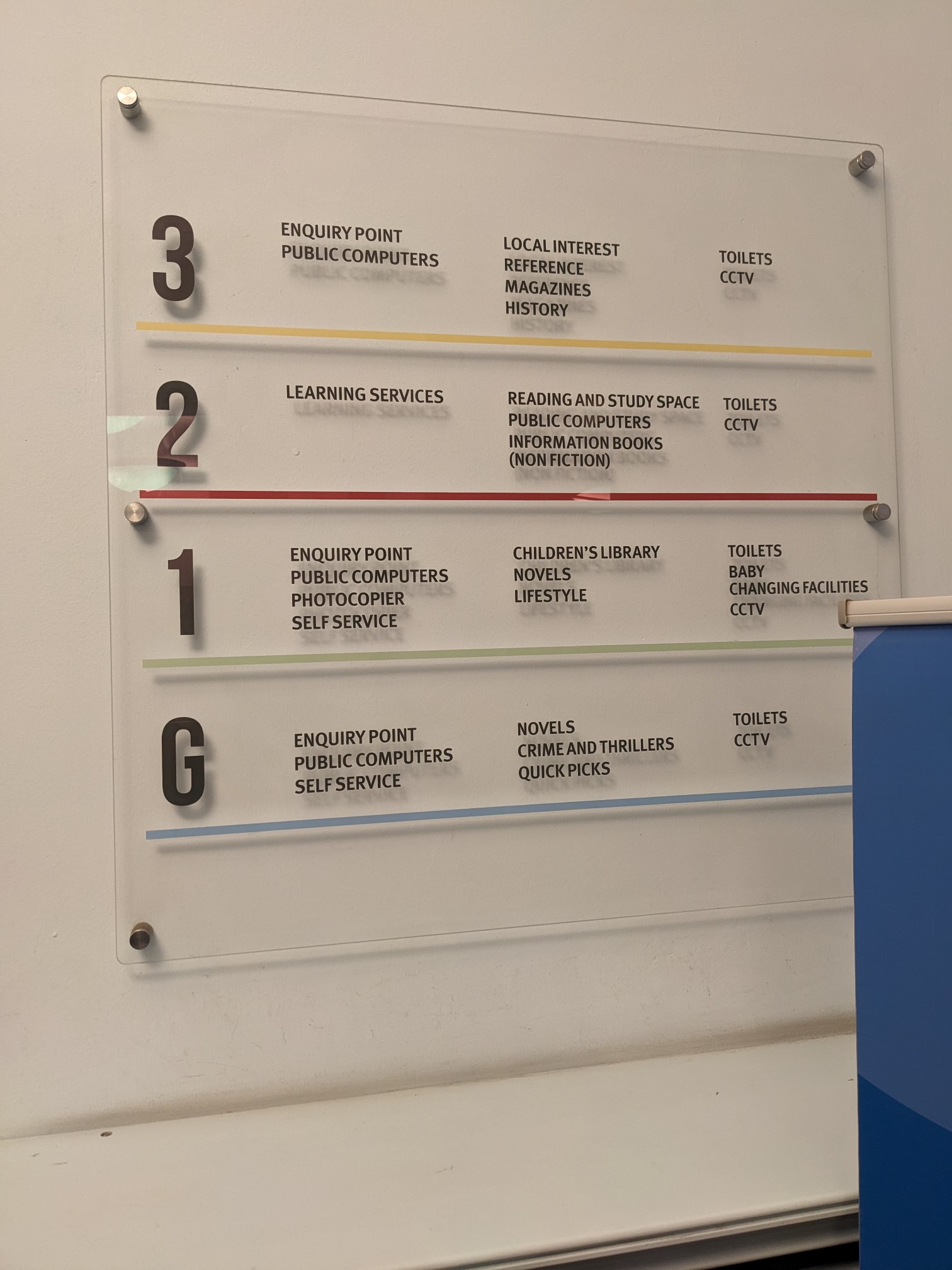
I like the way this display shows everything you can access with your library card:

Calderdale Central Library and Archives (Halifax) 

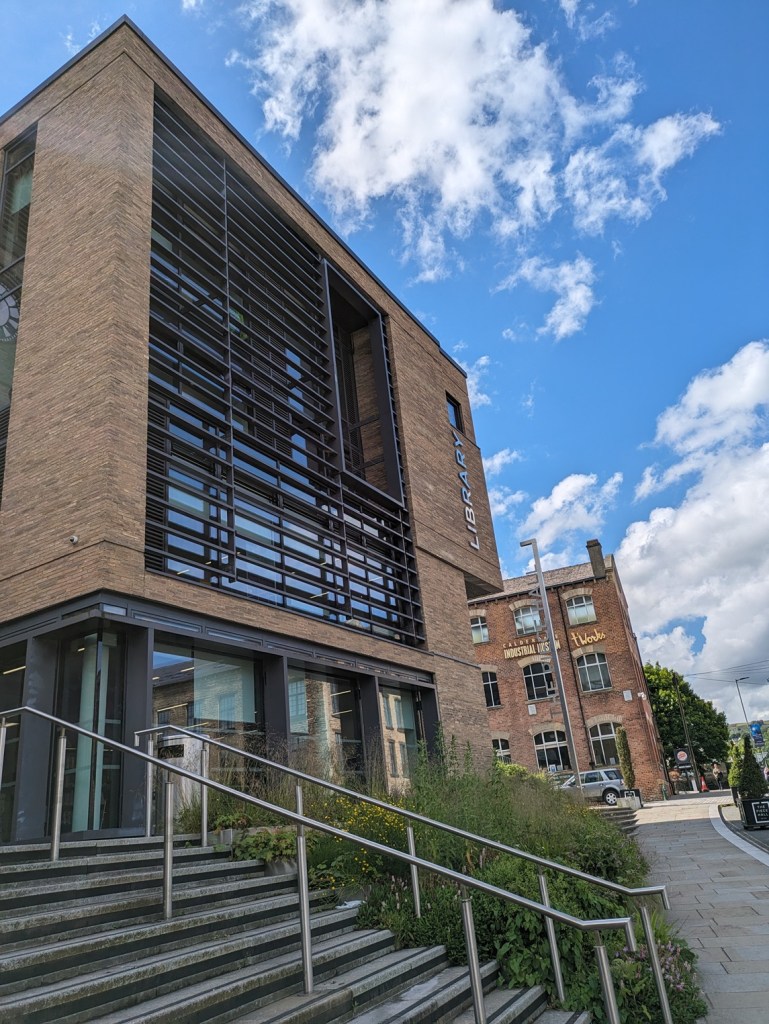
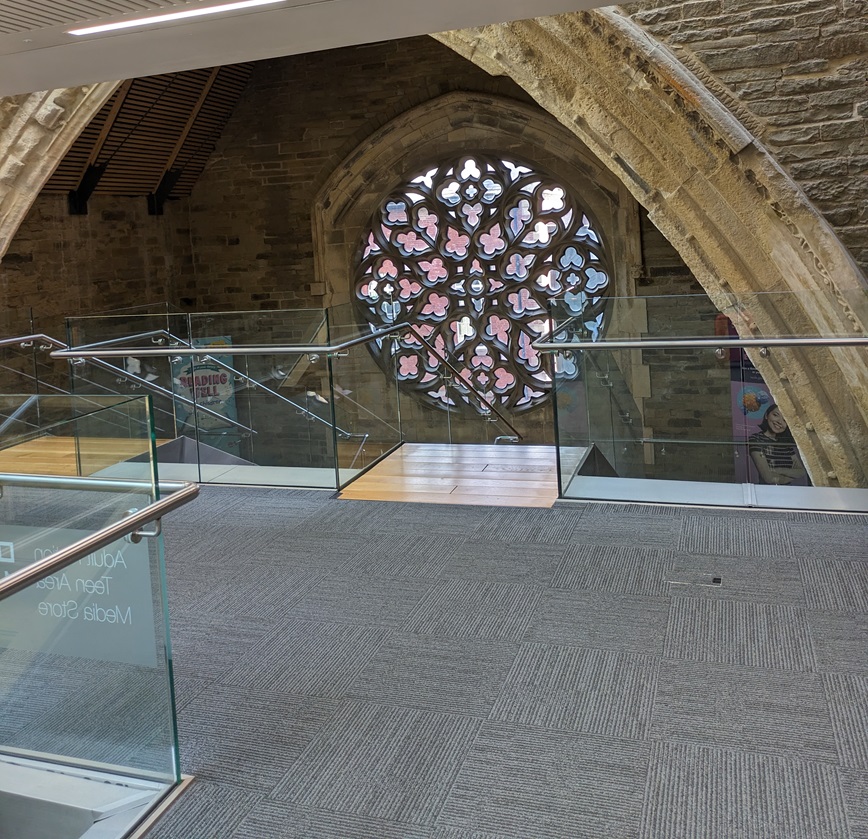
Calderdale Library is a really nice library. It’s a nice mix of wood and stone and feels very modern with light nicely incorporated which leads you in and up the stairs. The library reopened in 2017 incorporating the 1857 Square Congregational Church with a spire, rose window and stone arch. The spire means you can locate the library from a distance. The noise of the traffic outside is a shame but that is the price for having a library based centrally and near the railway station (and was probably accentuated on the day I was there as the weather was warm and the window slats were open).

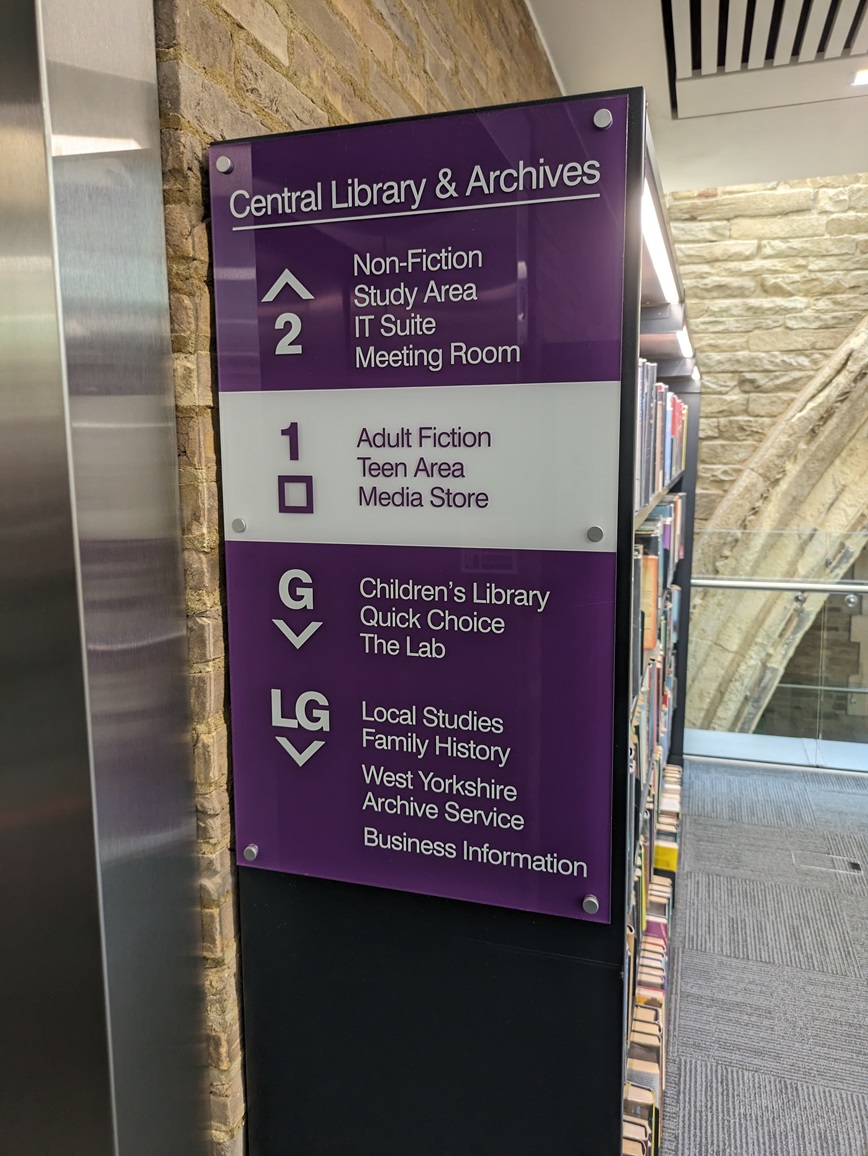
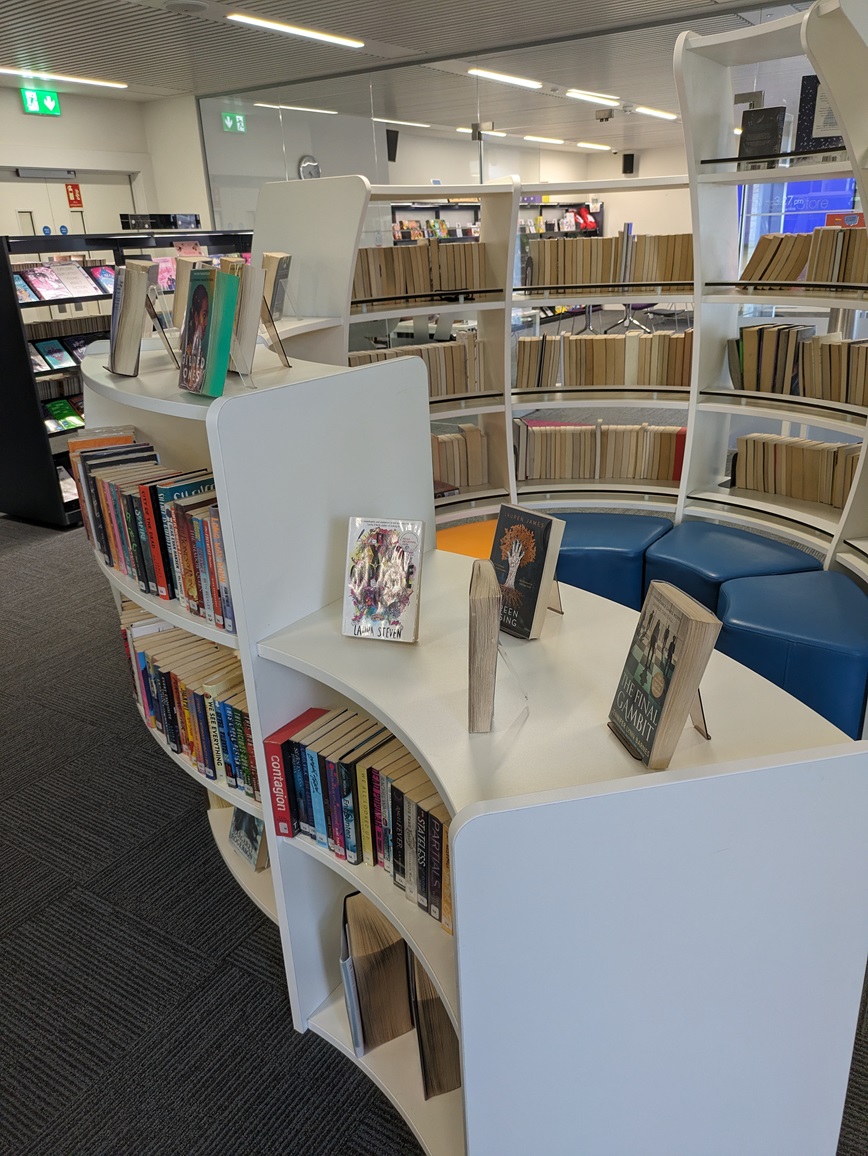
The entrance has an exhibition area, self-issue machines, book drop, quick choice and request sections and two members of staff on the ground level. The Children’s library was to the side, with the local studies and archives in the lower level. All together there are four floors and there are some separate meeting rooms, a teen area, and there is a lift. 

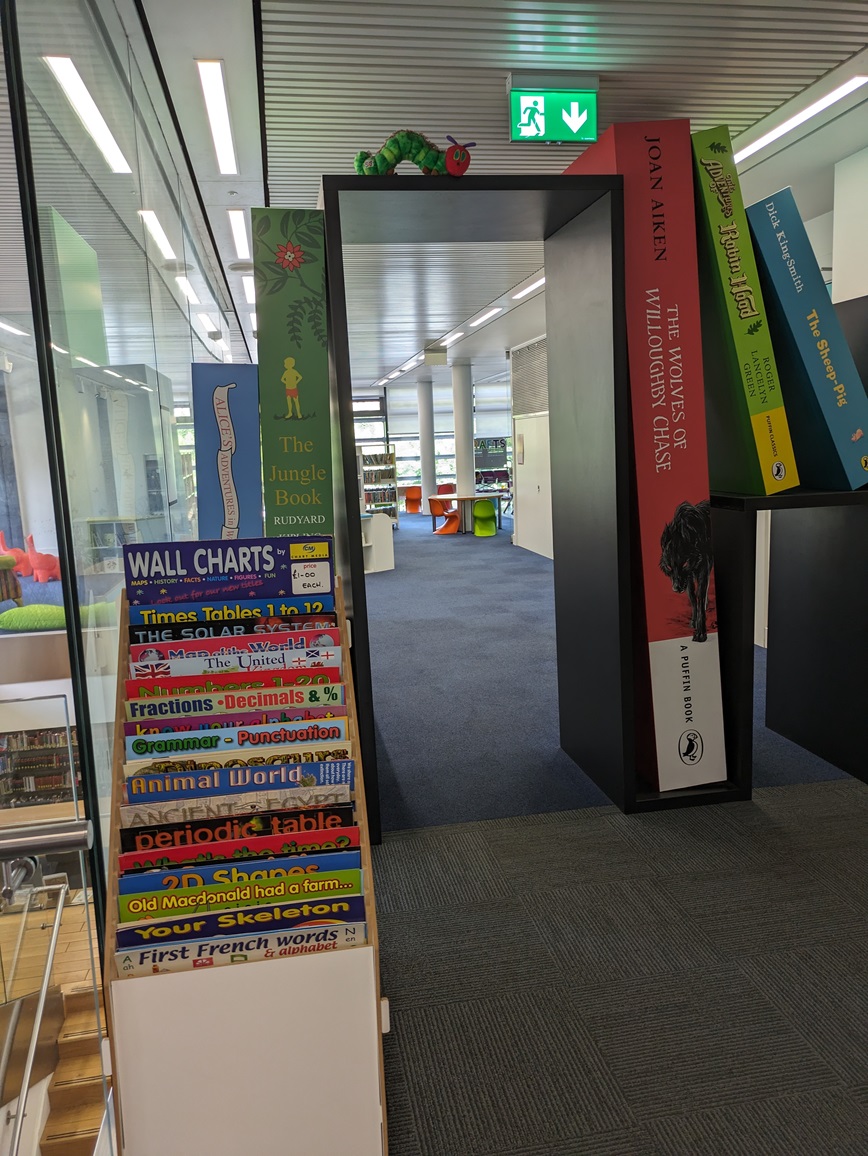
I took the middle picture from a very comfy purple chair at the top of the stairs. I like the entrance to the children’s library with the model dust jackets and a Hungry Caterpillar. If you finish in the library there is an industrial museum and the Peice Hall next door.

Hastings Library

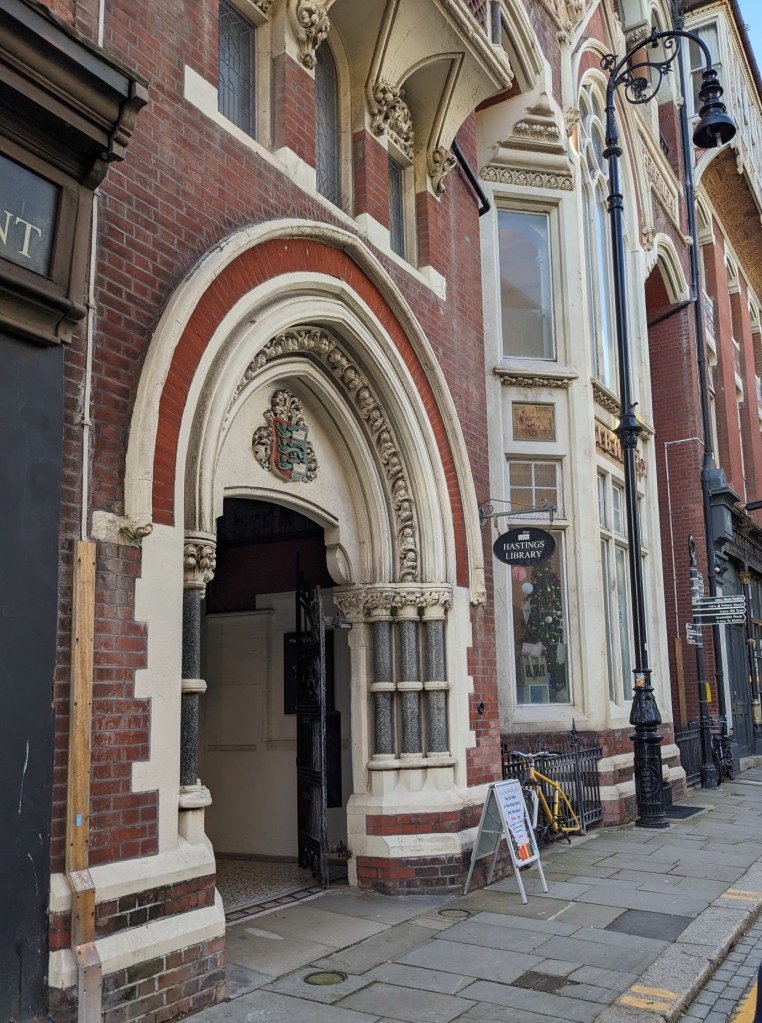
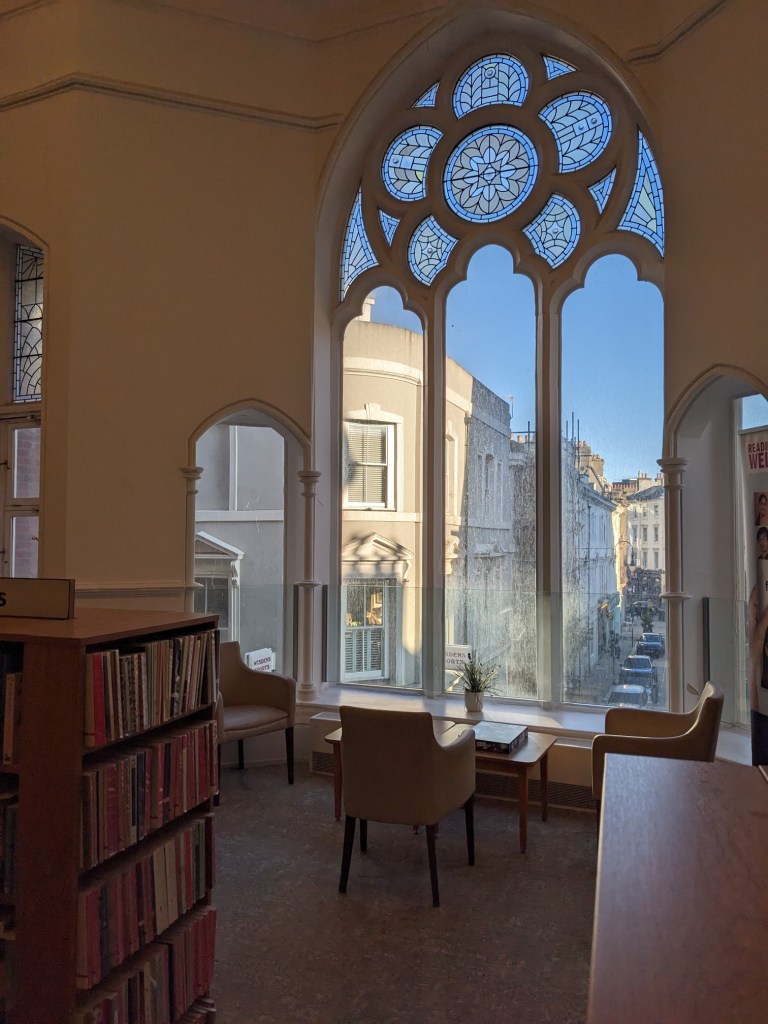
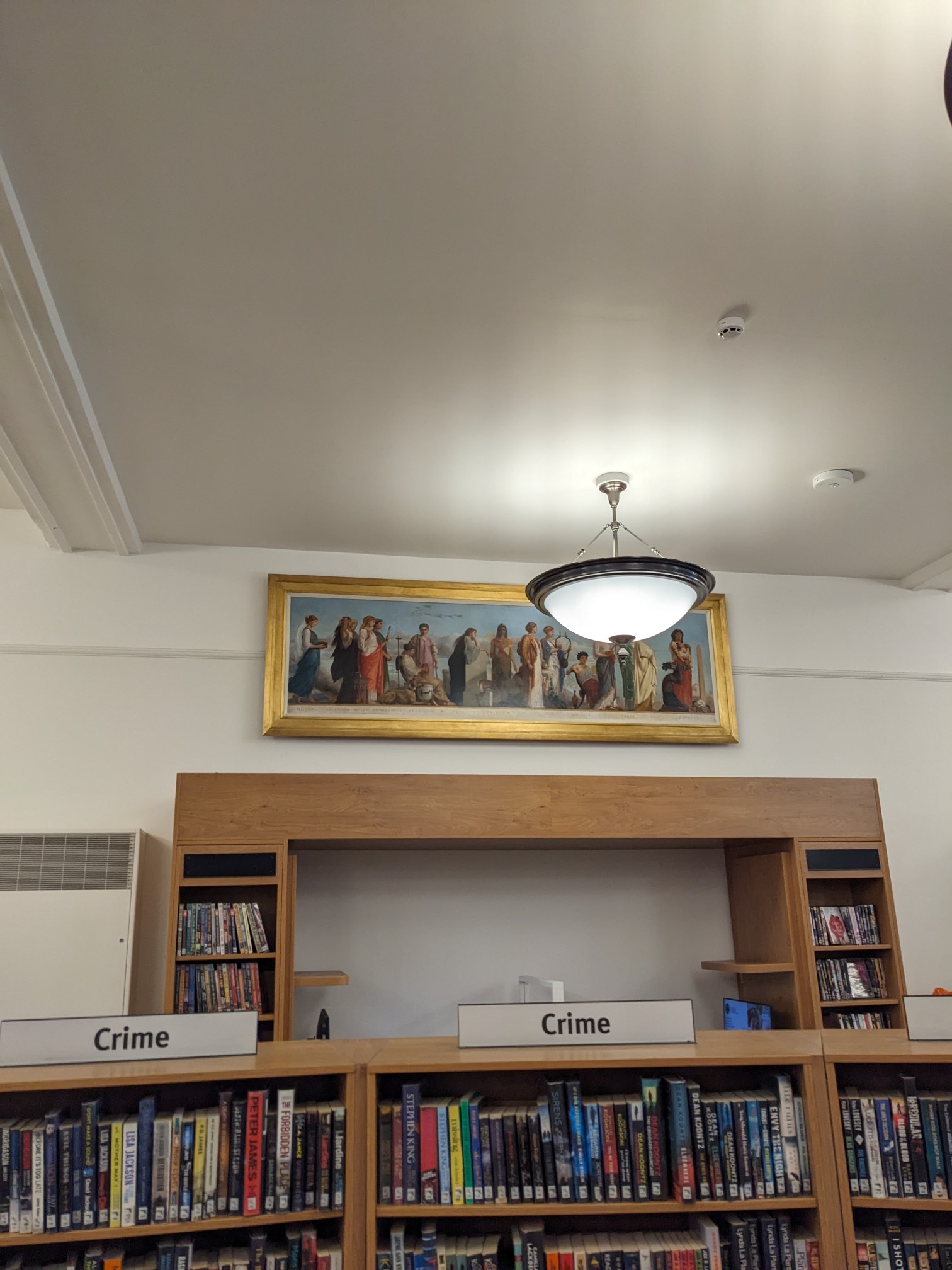
Hastings Library is located in a very interesting building. It feels like a chapel of reading. The building was refurbished in 2018. There’s some excellent images on the architect’s website where they describe it as a “Grade II listed, Italianate gothic revival style building constructed in 1878 and donated to the town by Lord Brassey.” 

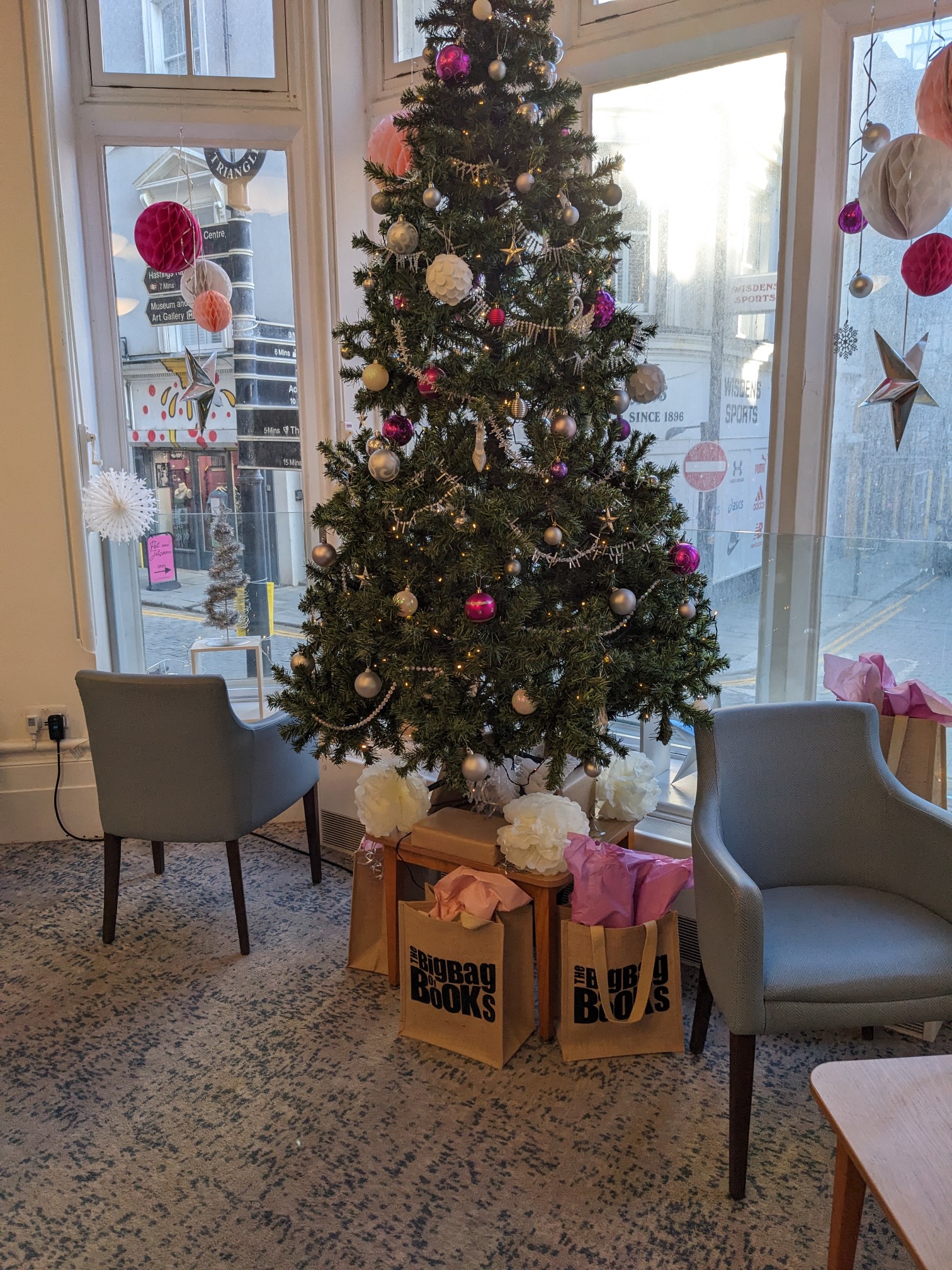
The library is on four floors and I expect making the building accessible to all has been a challenge, but each floor has its own character and feel. The large ceilings and windows contribute to the chapel feel and bring in lots of light even on a December day. 

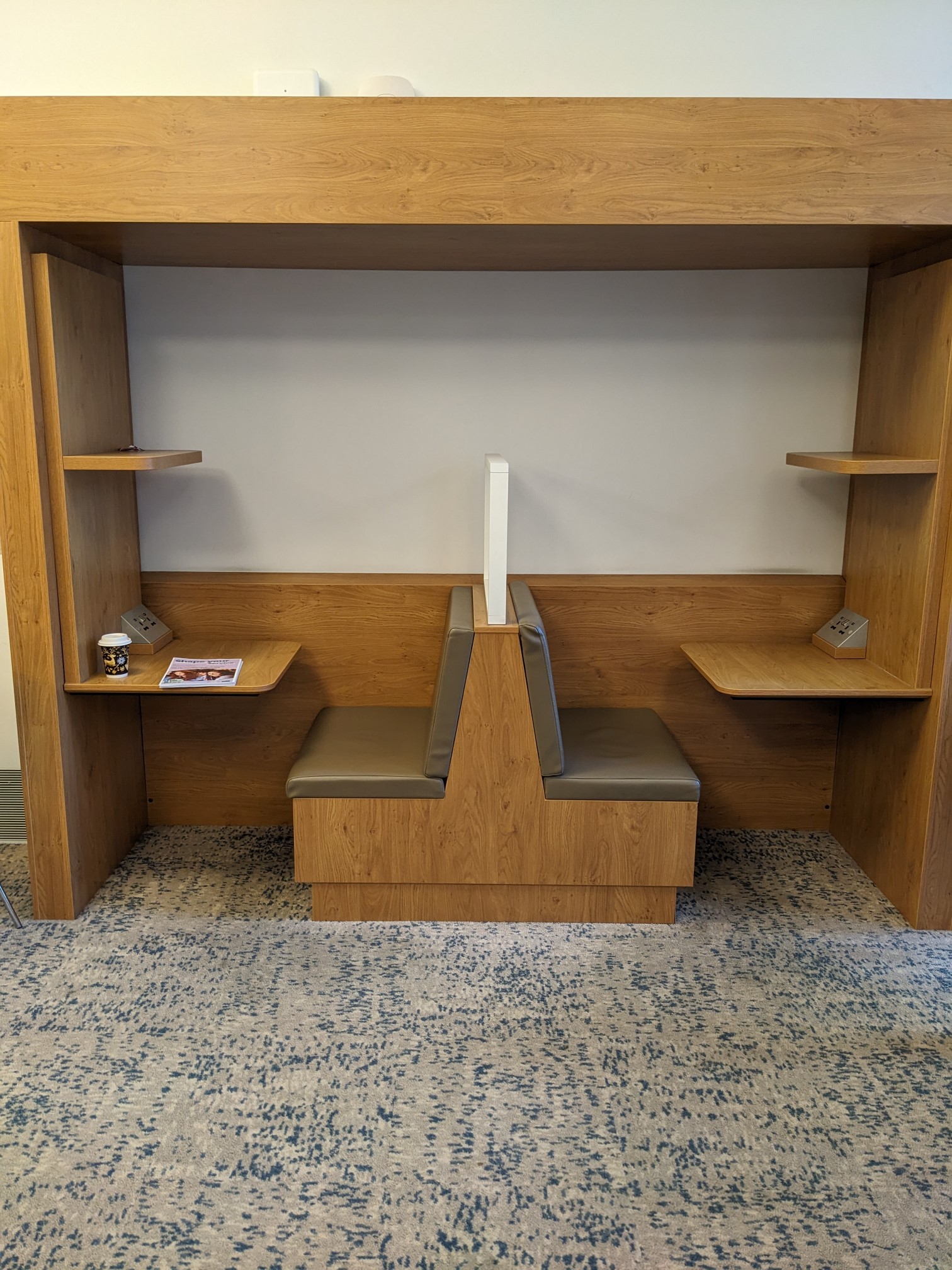
There are modern desks, computer stations and study booths dotted around the building. I couldn’t take a picture of the children’s library as there were children present, but the reading nooks built into the room divider looks comfy and imaginative. There were staff on most floors who engaged with us and offered to help and modern self-service kiosks. There was also an extensive local history section (1066 and all that).

Guildhall and City Business Libraries

20160727_175219

It strikes me as quite strange to have one entrance and then one library on the ground floor and a library with a different name on the floor above, but I realise there’s a history there.

cbl-or-guildhall
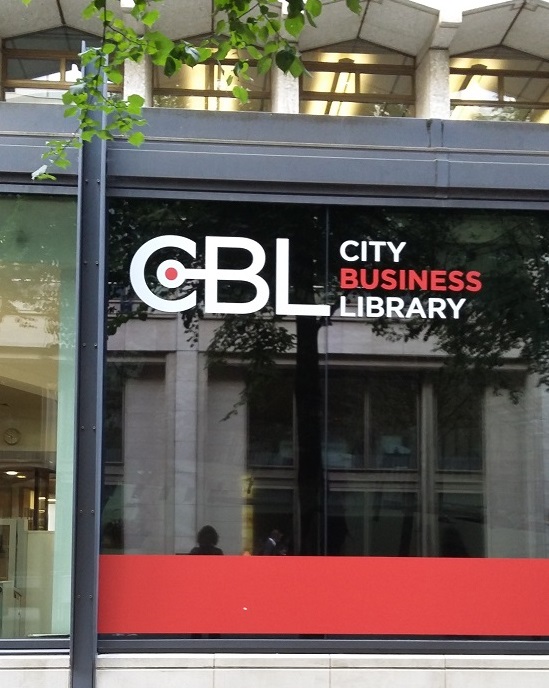
City Business Library. Image: Philafrenzy on Wikimedia

The Guildhall Library’s website explains it best:

In 2009-2010 the Library was transformed again with the former Printed Books section forming the nucleus of the Library you see today. The Prints and Maps and Manuscripts sections moved to London Metropolitan Archives but some major manuscript collections are still housed at Guildhall. Guildhall Library now shares a building with the City Business Library, so users can now move very readily between current and historical business resources as well as having access to the Internet and the Department’s extensive range of online resources. In fact the City Business Library, once called the Commercial Reference Room, has returned to its original home: first housed at Guildhall Library it moved to Basinghall Street in 1970 and later to Brewers’ Hall Garden.

The new Guildhall Library is a major public reference library, very connected with its past, holding a wide range of important works and sources including: a comprehensive collection of printed books on the City of London and its history, the Lloyds Marine Collection, a large collection of pamphlets from the 17th – 19th centuries covering political and social issues, a complete run of the London Gazette from 1665 to the present, extensive parliamentary resources including eighteenth-century poll books and a complete set of House of Commons papers from 1740, broadsides and an unrivalled collection of local and trade directories from 1677 to the present.

They’ve got a good blog at about their exhibitions and events with pictures: https://guildhalllibrarynewsletter.wordpress.com/

.

Bedford Central Library

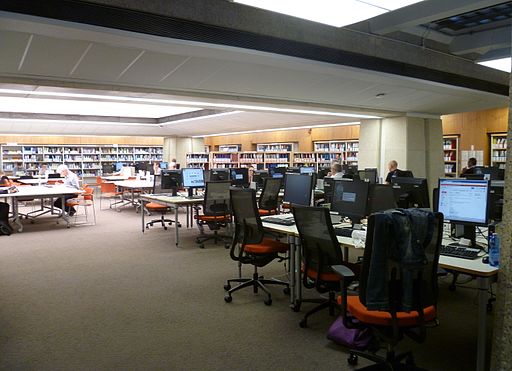
Bedford 1

Before I set off for Bedford Central Library, whilst I was checking the address and map, I came across Google reviews of the Library. I have never bothered to read reviews of a library before as they are always a mixed bag and I believe people are more likely to write a review when they have something to complain about. The first reviewer had been complaining about the fact that there were mothers and babies singing nursery rhymes all the time. So I thought it hilarious that I turned up at exactly the moment baby rhymetime started!

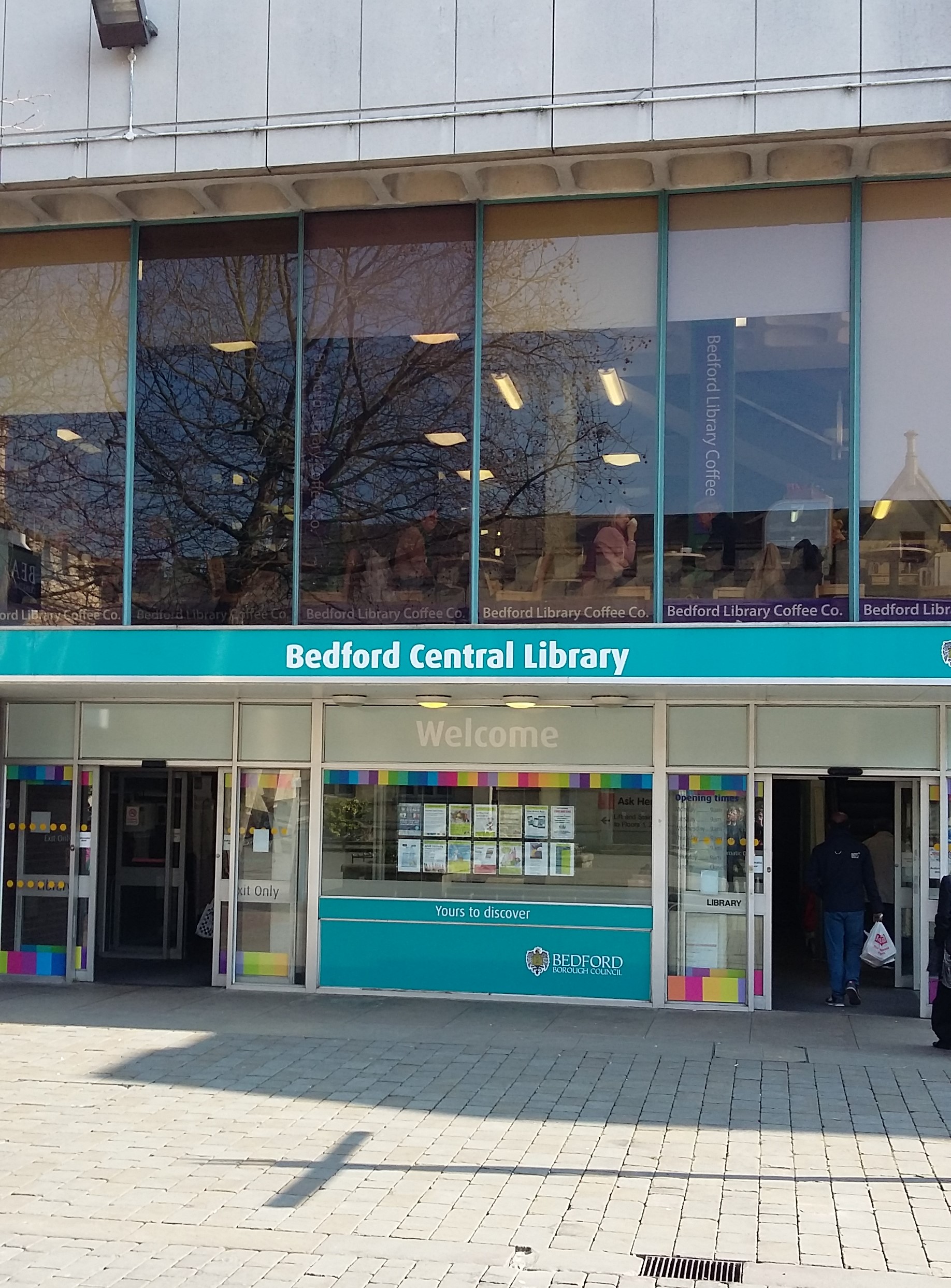
Bedford Central Library is in a pedestrian area and looks very inviting and colourful from the outside. The ground floor has an information desk and a book drop-off point but then you need to get on the rather grubby and drab escalator (or take the lift or stairs). However when you get to the first floor you enter a very big library space with another wraparound mezzanine (or gallery) above. As it is open plan, it is true that you could hear the nursery rhymes throughout. But, as a past frequenter of baby rhymetimes I don’t have a problem with half an hour of singing in a library and I could hear other readers subconsciously singing along to Wheels on the Bus as well.

It was a Thursday morning (on Thursdays the library closes at 1). It was very busy and bustly and felt like a genuine hub of the community. The stock was easy to navigate because it was open plan with clear sections and signs and I saw plenty of helpful looking staff around.

There was a silent study area on the mezzanine which was partially screened off with glass but perhaps it could do with doors too. There were, what looked like, noise reducing panels on the ceiling so I’m presuming noise has been recurring issue for the library. But better a noisy well-used library than an empty quiet one!

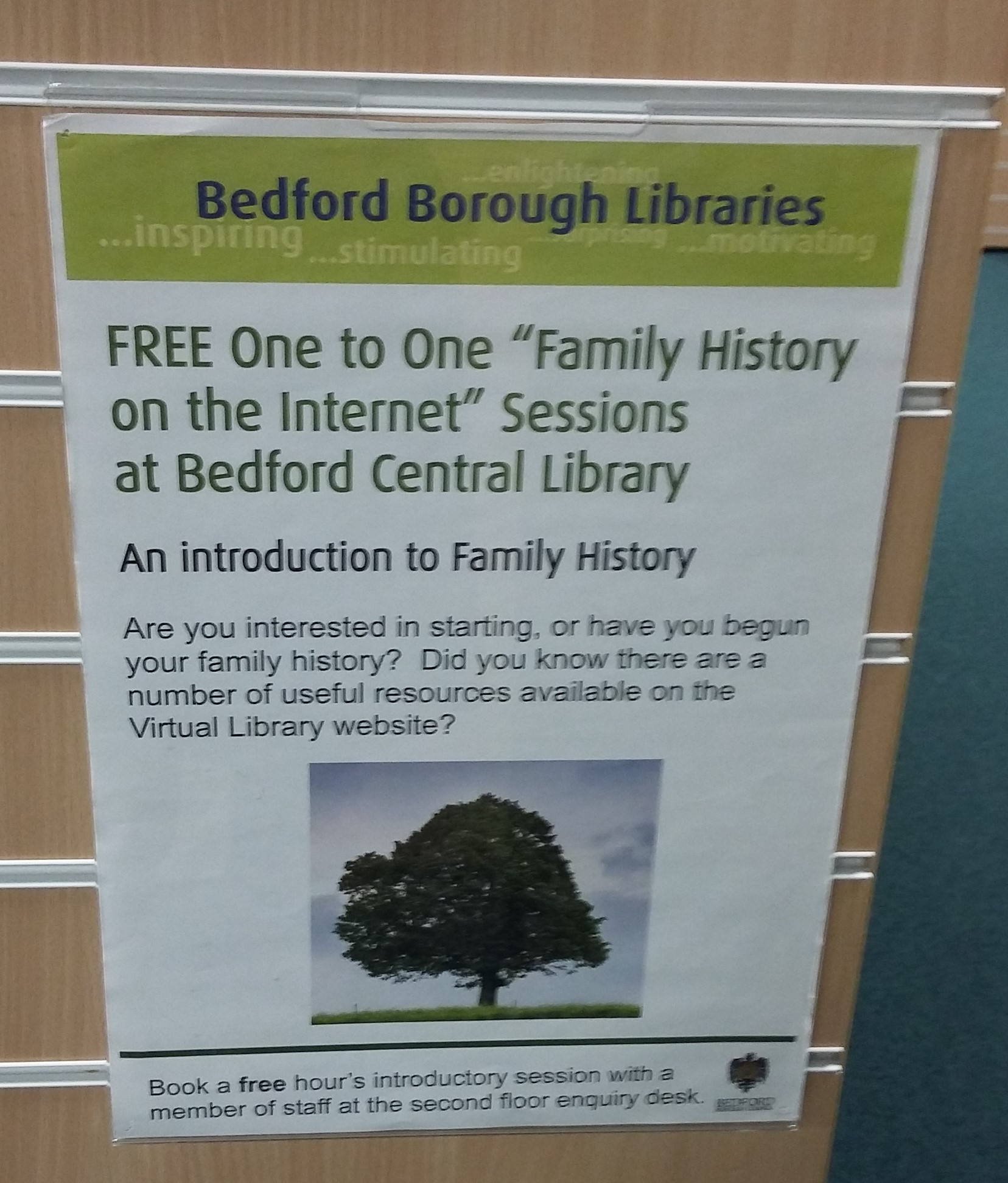
I had brought my father along on this visit and as he is an ex-local studies librarian. We spent most of our time in that corner. He found exactly the book he wanted and we had no problem locating and using the photocopier. He grumbled that the local studies material wasn’t very secure but did note that the filing cabinets were at least locked. I noticed lots of helpful leaflets, guides and posters and this one which I thought was a great use of librarian talent:
Bedford 3

We sampled the tea and cake in the small café and admired the view which we thought was a church but have now learnt is a shopping centre. We finished off with a short walk along the river and a look around The Higgins – Bedford’s Museum and Art Gallery.